Texas grid batteries: what the competition is about once they are everywhere
As of September 2026, grid-scale batteries in Texas are not simply growing in number. They have entered a “post-deployment” stage in which how they earn, how the market is run, their relationship with large loads, and policy risk are all changing at once. Describing batteries as a support for renewables no longer captures what is happening. In Texas, a battery is becoming less a generating asset than a business in the time-varying value of electricity.
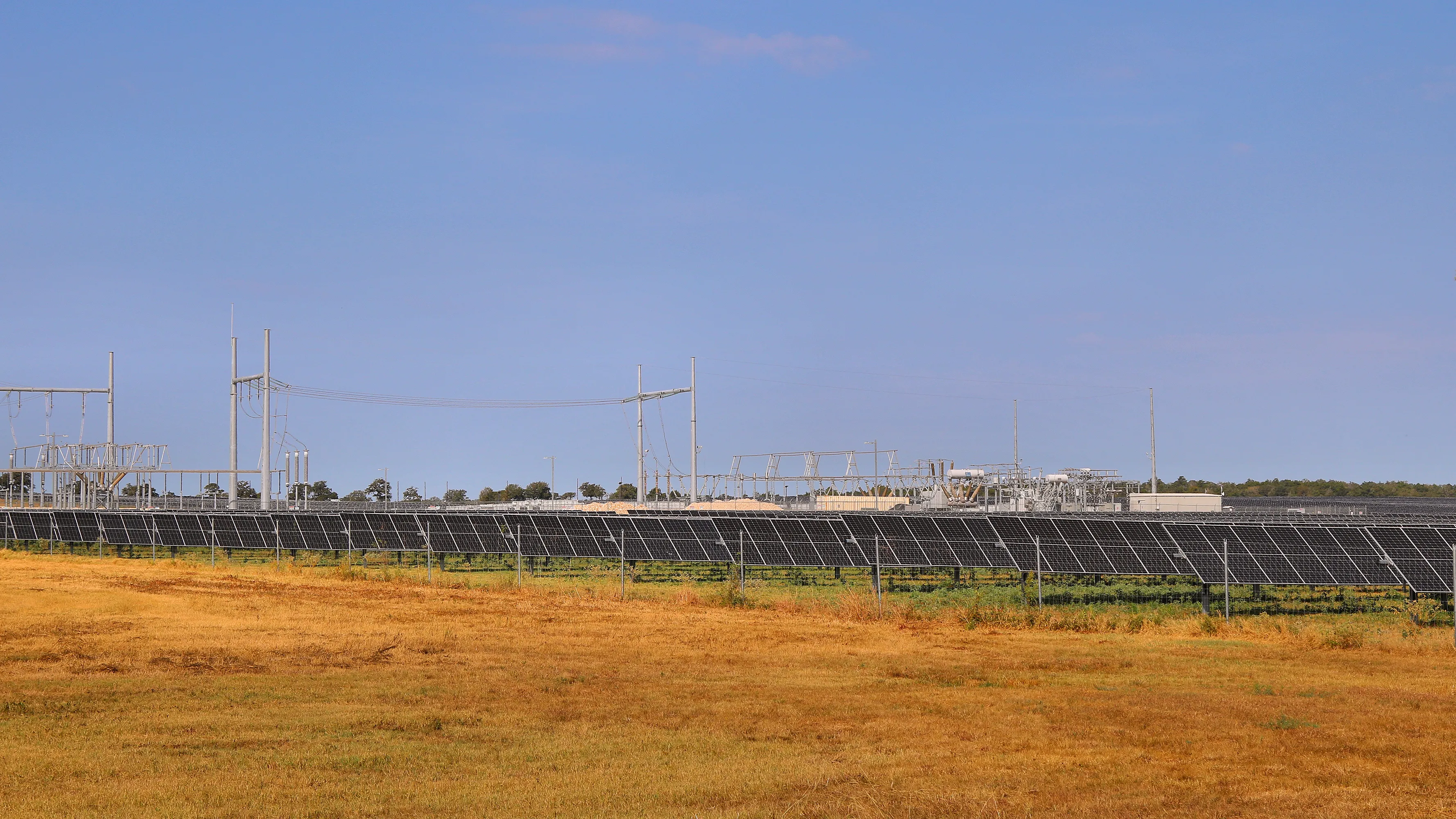
The Big Star Solar Project in Bastrop County, Texas. A 200 MW solar plant with an 80 MW battery alongside it. Photo: Larry D. Moore / Wikimedia Commons (CC BY 4.0)

A market that ran ahead of global growth
The change is part of a global trend. According to the International Energy Agency (IEA), 108 GW of battery storage was added worldwide in 2025, 40% more than the year before. About 80% of the additions were grid-scale, and while projects centre on two-hour systems, four-hour and longer systems are spreading in markets where solar has grown. REN21 likewise reports that global battery deployment rose about 65% in 2024, citing falling battery prices, rising renewable generation and the increasing frequency of low and negative prices (IEA, 2026; REN21, 2025).
The change in costs is also large. According to the International Renewable Energy Agency (IRENA), the average installed cost of grid-scale batteries fell 93%, from $2,571/kWh in 2010 to $192/kWh in 2024 (IRENA, 2025).
Texas has run ahead in showing how this global change registers in market revenue. Ember found that solar’s share of generation in the state rose from under 5% in 2022 to 8% in 2024. As Figure 1 shows, the expansion continued: according to ERCOT’s independent market monitor, solar generation rose 49% in 2025, taking a 13.9% share of annual generation and passing coal’s 12.9% for the first time (Ember, 2025; Potomac Economics, 2026).
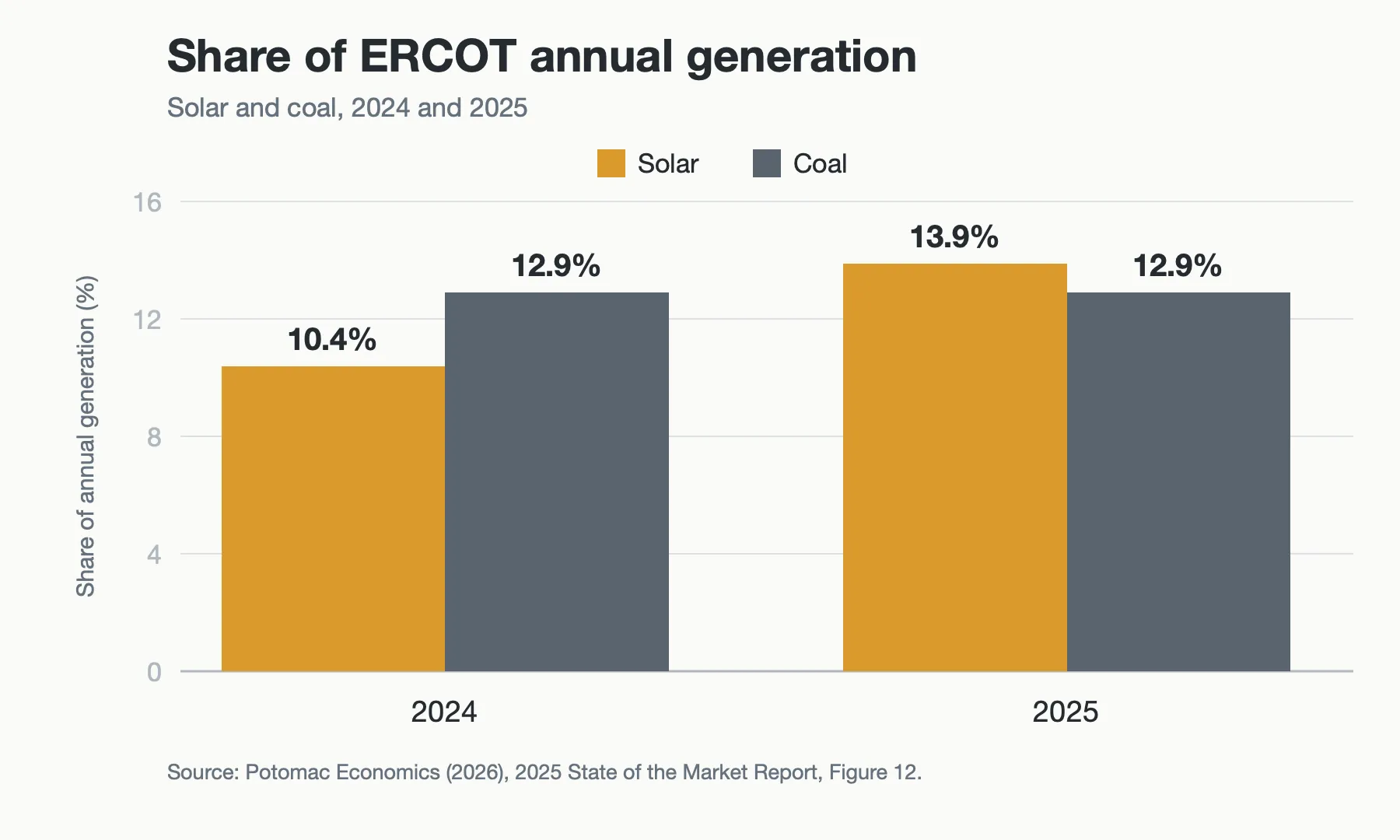
Figure 1. Solar’s and coal’s shares of ERCOT annual generation.
From ancillary services to shifting electricity in time
Early batteries earned their revenue from ancillary services such as frequency regulation and reserves. Since responding over short periods is enough, even one-hour systems were competitive. In an analysis by Modo Energy reported by Julian Spector of Canary Media, energy arbitrage — buying low and selling high — made up just 15% of battery revenue in 2023 (Spector, 2024).
But ancillary service markets are limited in size. As more capacity enters, the unit price for the same work falls. Batteries in ERCOT grew by 7.3 GW in 2025, taking total capacity past 17 GW by year-end. According to the independent market monitor, annual revenue per unit of capacity fell 37%, and ancillary service revenue fell by the same proportion. At the same time, simultaneous solar generation leaves midday electricity in surplus, and solar output falls away sharply in the evening. In 2025, 6% of solar generation was curtailed, and solar’s capacity factor in the hours of highest net demand fell to 1.7% (Potomac Economics, 2026).
What has value here is the function of moving midday electricity to the evening. Average discharge duration lengthened from 1.67 hours in 2024 to 1.83 hours in 2025. The three Lydian Energy projects that closed financing in 2025 were also two-hour systems, totalling 550 MW and 1.1 GWh. The more revenue shifts from “instantaneous response” to “shifting in time,” the more discharge duration, round-trip efficiency, degradation cost and price forecasting — not capacity alone — determine a project’s value (Howland, 2025; Potomac Economics, 2026).
That some days bring wide price spreads is not, however, the same as stable annual revenue. Modo Energy found ERCOT battery revenues hit a record low in 2025. As Figure 2 shows, annual revenue per kW of capacity fell from $193/kW in 2023 to $56/kW in 2024 and $29.4/kW in 2025 (an estimate). There were fewer extreme price spikes from heatwaves or cold snaps, competition between batteries intensified, and arbitrage selling prices moved closer to the level gas plants had been offering.
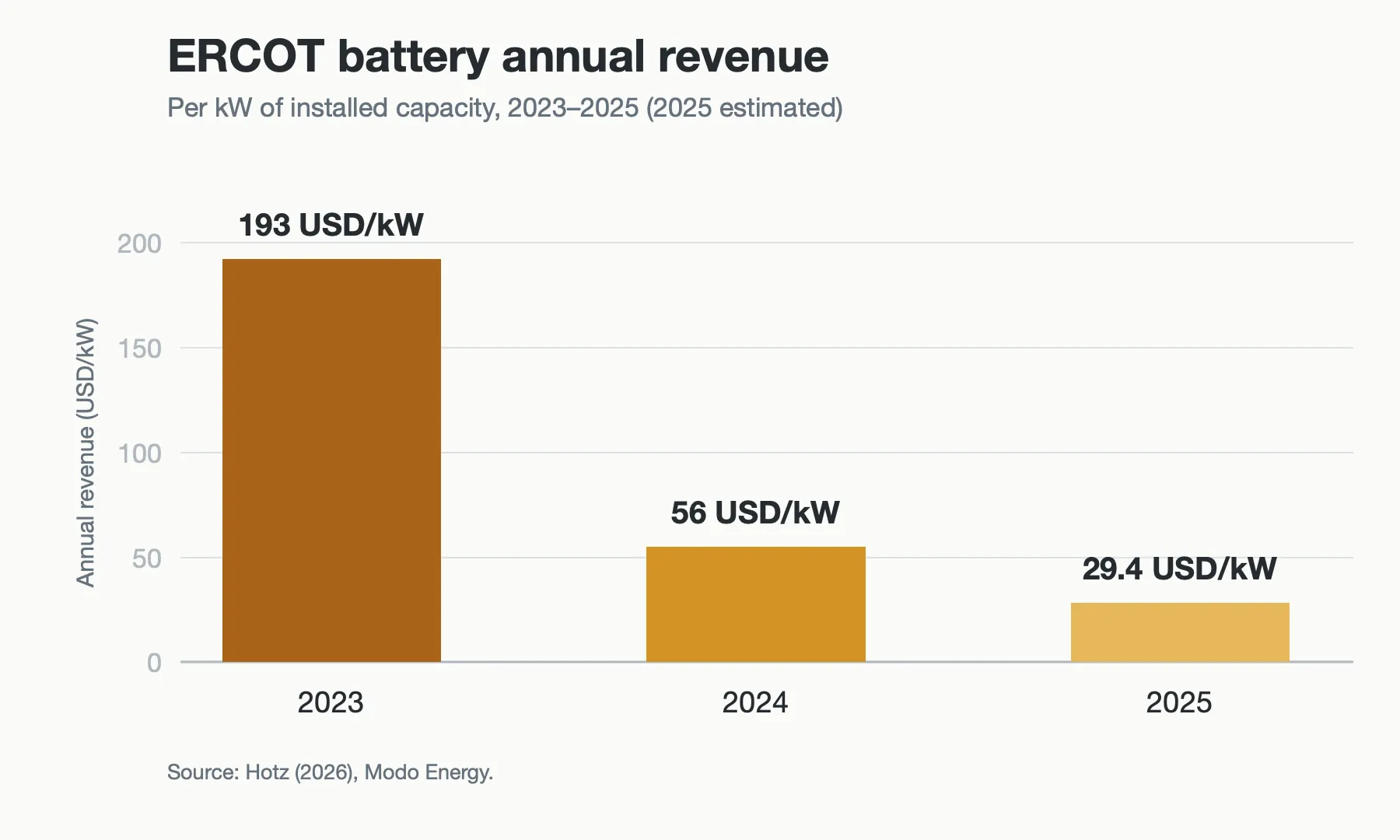
Figure 2. Annual battery revenue in ERCOT. The 2025 figure is a Modo Energy estimate.
The more batteries there are, the more they flatten cheap midday and expensive evening prices, narrowing their own revenue opportunity. This dilution of revenue is also called cannibalisation. It does not mean batteries become unnecessary; it means part of the benefit they bring to the system passes to consumers as lower prices. Indeed, Utility Dive, reporting an analysis by the American Clean Power Association, wrote that the roughly 5 GW of batteries added from summer 2023 through 2024 held down electricity costs by at least $750 million (Hotz, 2026; Martucci, 2024).
How RTC+B changed the rules of operation
On 5 December 2025, ERCOT brought Real-Time Co-optimization Plus Batteries (RTC+B) into service. It allocates energy and ancillary services together every five minutes, and treats a battery as one device rather than as separate charging and discharging facilities. State of charge (SoC) is also built into the market model, so charge and discharge can be instructed within the range of energy actually available (ERCOT, 2025a).
ERCOT expects savings in the wholesale market of more than $1 billion a year, by reducing manual reserve deployment and by selecting among resources with transmission congestion taken into account (ERCOT, 2025a). But the change does not automatically raise every operator’s revenue. With identical hardware, differences in revenue arise from automated bidding software that factors in the next day’s weather, transmission constraints, five-minute prices, SoC and battery degradation. Beyond the merchant model that takes on all price volatility, there is growing need to stabilise income by combining it with arrangements such as tolling agreements that reserve capacity to retailers or large consumers.
Data centre demand is a tailwind and a planning problem
On the demand side, AI data centres, cryptocurrency mining and oil and gas facilities are growing rapidly. ERCOT’s outlook at the end of 2025 put newly planned large loads at a cumulative 47.8 GW by 2030. A preliminary figure published in April 2026 put 2032 demand at 367.8 GW, but ERCOT itself cautioned that it “is not a forecast of what will actually be built and may overstate future demand.” There is so much duplication and withdrawal among projects that applications cannot be treated as demand (ERCOT, 2025b, 2026a).
Robert Walton of Utility Dive reports grid figures’ view that AI data centre loads are not the traditional flat demand but swing sharply up and down, like a steel mill. For batteries, rising demand and wider price spreads are a commercial opportunity. From the system’s point of view, though, the behaviour of consumers as well as generators has to be understood in detail (Walton, 2025).
ERCOT accordingly introduced “Batch Zero” in 2026, assessing the system impact of large loads in groups. The threshold is around 75 MW and above, and the process checks the maturity of plans and the firmness of developers’ commitment. This is a shift from mechanically adding application counts to the demand forecast towards testing feasibility. Batteries are likely to be valued not only as supply but as a means of adjustment when data centres reduce demand in emergencies or switch to on-site generation (ERCOT, 2026b).
Tailwinds and constraints strengthen together
Policy is not uniformly supportive. According to the US Internal Revenue Service (IRS), the federal clean electricity investment credit (48E) applies to standalone storage as well (IRS, n.d.). The large tax law enacted in 2025 brought forward the end of credits for wind and solar but exempted storage from the same sunset provisions (IRS, 2025). For projects beginning construction from 2026, however, how far batteries and key components depend on “prohibited foreign entities” is also examined. If the degree of dependence exceeds the threshold, the credit may not be available. Developers therefore have to verify not just prices but the origin of cells and materials up the chain (IRS, 2026).
State policy runs on more than one track. The Texas Energy Fund supports new dispatchable generation with low-interest loans, but grid-scale batteries are in principle excluded; the main beneficiaries are gas plants. In backup power packages for critical local facilities such as hospitals, on the other hand, configurations including batteries can be chosen (Public Utility Commission of Texas, n.d.). In addition, HB 3809, effective September 2025, requires lease agreements for batteries of 1 MWh or more to address removal, reuse and recycling, restoration of the land, and financial assurance to cover the costs. That decommissioning costs can no longer be shelved as a future problem is itself a sign of a maturing market (Texas Legislature, 2025).
The Texas battery market has moved past the stage of competing on “how many gigawatts were added.” On a system where solar has passed coal, how to connect the value of day and night. How to allocate SoC in a five-minute market. How to contract with large loads, and how to build procurement rules and decommissioning liability into a project. What will decide competitiveness from here is less the battery box itself than the design capability that ties together operations, contracts and finance. Texas is showing, in real time, batteries turning from an accessory to renewables into a core asset that rearranges time in the electricity market.
References
- Electric Reliability Council of Texas. (2025a, December 5). ERCOT goes live with Real-Time Co-optimization Plus Batteries (RTC+B)
- Electric Reliability Council of Texas. (2025b, December 19). Report on the capacity, demand and reserves in the ERCOT region
- Electric Reliability Council of Texas. (2026a, April 15). ERCOT releases preliminary long-term load forecast for years 2026–2032 for PUCT discussion
- Electric Reliability Council of Texas. (2026b, June 18). PGRR145: Batch Zero process for large load interconnections
- Ember. (2025). US electricity 2025 special report
- Hotz, L. (2026, February 3). Why were ERCOT battery revenues so low in 2025?. Modo Energy.
- Howland, E. (2025, July 15). Lydian Energy lands $233M in financing for 550 MW/1.1 GWh of Texas storage. Utility Dive.
- International Energy Agency. (2026). Global energy review 2026: Battery storage
- International Renewable Energy Agency. (2025). Renewable power generation costs in 2024
- Internal Revenue Service. (n.d.). Clean electricity investment credit. Retrieved September 3, 2026, from https://www.irs.gov/credits-deductions/clean-electricity-investment-credit
- Internal Revenue Service. (2025). Internal Revenue Bulletin 2025-36
- Internal Revenue Service. (2026, February 12). Treasury, IRS provide guidance for certain energy tax credits regarding material assistance provided by prohibited foreign entities
- Martucci, B. (2024, December 10). Texas storage deployment saved at least $750M since 2023. Utility Dive.
- Potomac Economics. (2026, June). 2025 state of the market report for the ERCOT electricity markets
- Public Utility Commission of Texas. (n.d.). Texas Energy Fund frequently asked questions. Retrieved September 3, 2026, from https://ftp.puc.texas.gov/public/puct-info/industry/electric/business/texas-energy-fund/TEF_FAQ.pdf
- REN21. (2025). Renewables 2025 global status report: Solar photovoltaics
- Spector, J. (2024, May 23). How Texas became the hottest grid battery market in the country. Canary Media.
- Texas Legislature. (2025). H.B. 3809: Relating to the removal of battery energy storage facilities
- Walton, R. (2025, July 14). Data center activity “exploded” in Texas, spiking reliability risks. Utility Dive.